
What Two Earthquakes Taught Me About Faith
By Ned Abenroth
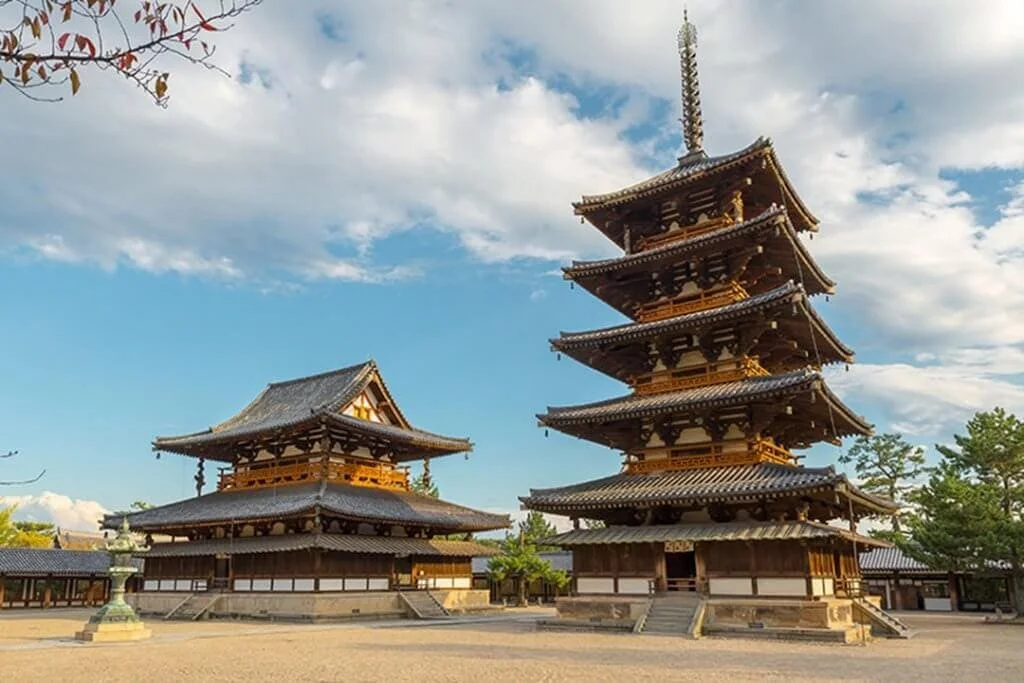
I recently spent three weeks in Japan. While I was there, I experienced two earthquakes. Amazingly, about five seconds before the shaking began, we got a phone alert that a quake was about to happen. Then the swaying started.
In a city like Tokyo, where more than 100 earthquakes a year are strong enough to rattle buildings, structural strength is found in flexibility, not rigidity. The more a building can move without breaking, the more it can endure a shifting landscape. Rigid buildings don't survive earthquakes. They shatter. The ones still standing are the ones that learned how to sway.
We live in a time when technological change and overall complexity are increasing faster than we can tolerate. Change and complexity are both anxiety-provoking because they remind us we are not in control. The understandable move is to retreat to simpler explanations of the world, ones that ask less of us, and let us externalize our anxiety onto someone or something else. This is the poisonous comfort of certainty, of fundamentalism, of rigidity. Muscles-tensed rigidity feels strong, but like a building with no give, it is actually far less resilient than relaxed flexibility. It holds until, all at once, it doesn't.
Counter to this retreat is the great call to be people of faith. Faith is not about what you believe or how firmly you believe it. It has little to do with affirming intellectual ideas or with the accuracy of our beliefs. There are people with all kinds of misguided ideas about God who nonetheless have great faith. The reverse is true, too: people who are deeply articulate and theologically sophisticated could have little faith.
Faith is about what we are willing to venture and risk; what we are willing to trust beyond our own understanding. It is about engagement with a relational God, more than adherence to a historical system of belief or practice. It is more concerned with passion and love than with morality, more with the long odds than the sure bet. It is found with the man in the arena, as Roosevelt once put it, and not with the crowd that only watches.
This is the flexibility that survives the quake. Faith, like a building built to sway, holds its shape not by refusing to move but by moving without breaking. Certainty is rigid steel, strong until the moment it isn't. Faith is more like a frame built to flex: it bends under pressure and returns to center, again and again, without fracturing.
I say all this to say this: our increasingly polarized society is hardening into homogeneous ideological camps with black and white thinking. But certainty is faith's kryptonite. Unknowing and doubt are the trellis that let faith grow and flower. My hunch is that there’s little difference in the amount of faith in our ideological camps. Both sides have their fundamentalists. Both sides have their earnest faithful. What separates them isn't how much they believe, but whether they can still sway.
In a world increasingly marked by hardened camps on every side, people of faith—the ones who have learned to move without breaking—need to find each other, regardless of creed or worldview. Our capacity to thrive in the midst of uncertainty is an essential ingredient for bridging conversations. It is the faithful, not the certain, who will grow weary of their own rigid defenses and venture out into the no-man's-land you must cross to reach common ground.
It is the faithful who can find a way back to each other, and to God. And as they do, it won't look like agreement. It will look like two sides of a garden trellis built to flex, still standing, still swaying, side by side, and blooming.